
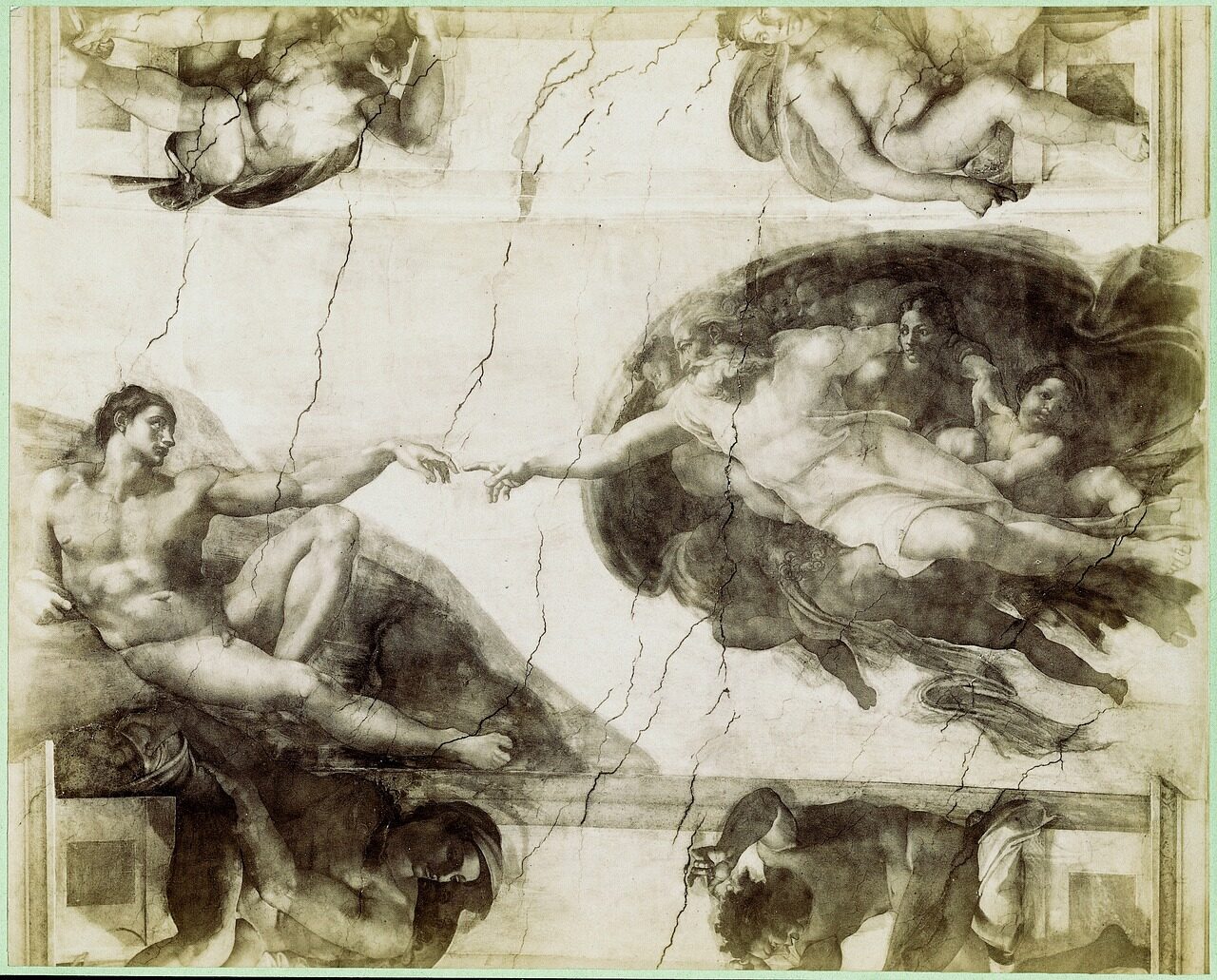

In the early sixteenth century, Michelangelo Buonarroti emerged as an iconoclast of towering genius—his creations redefined sculpture, painting, and architecture.
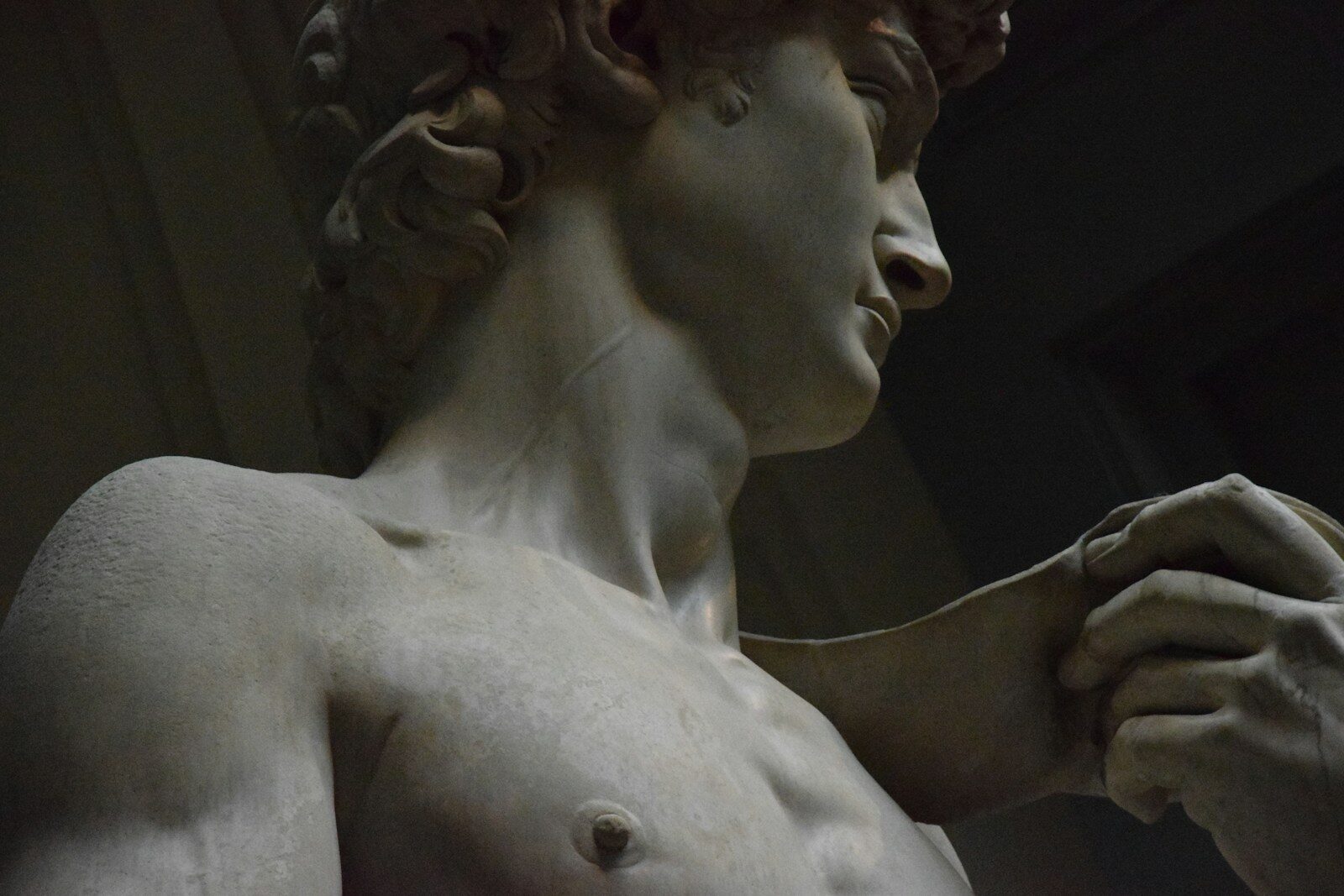
His David (1501–1504) stands at 17 feet tall, carved from a single rejected block of Carrara marble; lauded for its anatomical precision and psychological intensity. Likewise, his Pietà (1498–1499) conveys both sublime grief and miraculous serenity in marble. Later, his frescoes in the Sistine Chapel ceiling (1508–1512) and The Last Judgment (1536–1541) revolutionized Western art with storytelling on an epic scale, suffused with emotional depth and theological gravitas. He was acclaimed “Il Divino”—the divine one—for infusing terribilità into his works, a sense of awe that still holds viewers centuries later.
This installation transforms that genius into a living environment, letting modern audiences enter Michelangelo’s world as active participants rather than distant observers.
Immersive Scale and Detail
The “Michelangelo: Art & Legacy” exhibition stands apart from conventional showcases. Visitors encounter full‑scale reproductions of his masterpieces—the Pietà, Moses, David—faithfully rendered in 360° environments. Enveloping viewers within a dome-like installation, the Sistine Chapel is reconstructed in stupefying detail, from the Creation of Adam to the prophets and sibyls, expanding our visual access to his brushstrokes and compositional genius. This immersive format encourages close visual inspection—revealing minute cracks, chisel marks, and color subtleties that often remain unseen in situ.
Such dramatic scale and intimacy shift the exhibition from passive display to participatory experience. The viewer is invited into both the grandeur and vulnerability of Michelangelo’s creative process, fostering a direct, almost tactile connection with Renaissance mastery.
Art‑Historical Significance and Interpretation
Michelangelo’s significance in art history is immeasurable. As this exhibition allows us to stand beneath his painted heavens and beside his carved protagonists, we confront his mastery of human form—unique even among the giants of his age . His anatomical precision, from the sinews of his nudes to the tension in prophetic gaze, conveys not only skill but empathy. His works embody both classical idealism and Christian spirituality—synthesized with introspection and dramatic expression.
The show situates Michelangelo firmly within his own era—an intellectual Renaissance polymath, influenced by classical antiquity, the Medici court, and the Catholic Church—and yet transcending them. His technical innovations, such as contrapposto in David and muscular expressiveness in Pietà, broke the mold of his contemporaries and helped propel Western art forward . Experiencing these works in an installation challenges us to reassess their context—as living artefacts rather than static museum pieces.
Emotional and Experiential Resonance
This installation doesn’t merely show Michelangelo—it invites us to feel him. Standing alongside David, we sense youthful confidence; beneath his frescoes, we feel both spiritual uplift and human frailty. This emotional resonance is not accidental—it taps into what scholars call his terribilità, a tension between physical power and psychological vulnerability .
The 360° design also provokes reflection: we move through aisles beneath sculpted gazes, become enveloped by biblical narratives overhead, and witness Michelangelo’s changeable relationship to his faith. Intimate reproductions of Moses or Pietà whisper of sorrow and sanctity in ways that museum lighting and barriers rarely allow. The installation gives space for wonder, introspection, and awe—the very emotional landscape Michelangelo designed his works to evoke.
Contemporary Relevance: Why This Exhibition Matters Now
In today’s rapid digital age, Michelangelo’s devotion—expressed through decades of sculpting, painting, and sketching—feels both distant and needed. This exhibition offers not just education but reconnection: to the slow intimacy of hand‑crafted art, to the spiritual and human questions that permeated Renaissance creativity.
Its accessibility is compelling—open to all ages, fully ADA‑compliant with no artistic or spiritual prerequisites . The inclusion of a “Creative Lab” invites visitors to sketch, explore form and composition, and channel their own artistry—a hands‑on extension of the exhibition’s immersive philosophy. It’s not just campaign-style engagement—it’s an invitation into Michelangelo’s mindset: draw, question, sculpt, and reflect.
Moreover, it bridges geography and authority: with more people than ever unable to journey to Florence or Vatican, this exhibit brings Renaissance transcendence to local communities. To experience Pietà’s hush in Miami or hear your own footsteps beneath the simulated Sistine Chapel cannot be underestimated in its cultural impact.
“Michelangelo: Art & Legacy” functions not merely as an exhibition, but as a portal—connecting past and present, genius and audience. By presenting full‑scale sculptural and fresco reproductions within immersive environments, it dissolves the distance between us and Michelangelo’s brilliance. We move from spectatorship to encounter; from art history to art presence.
It is, in every sense, a profound celebration—and reaffirmation—of Michelangelo’s enduring legacy.